The spots appear after a sprinkler hits the car, or a summer storm dries on the hood in the Matthews sun: pale rings and dots that laugh at a normal wash. Owners scrub harder, which adds scratches without touching the spots, because by then the problem is not on the paint. It is in it. Hard water and acid rain damage comes in two stages, and telling them apart is the whole diagnosis.
Stage one: deposits sitting on the surface
Hard water is water carrying dissolved minerals, mostly calcium and magnesium. When a droplet dries, the water leaves and the minerals stay, forming the pale crusty ring you can feel with a fingertip. At this stage the damage is a deposit, not a wound. A dedicated mineral remover dissolves it chemically, and a clay treatment lifts what remains. No polishing is needed, and aggressive scrubbing at this stage is the one thing that can make the situation worse by scratching the surrounding clear coat.
Stage two: etching into the clear coat
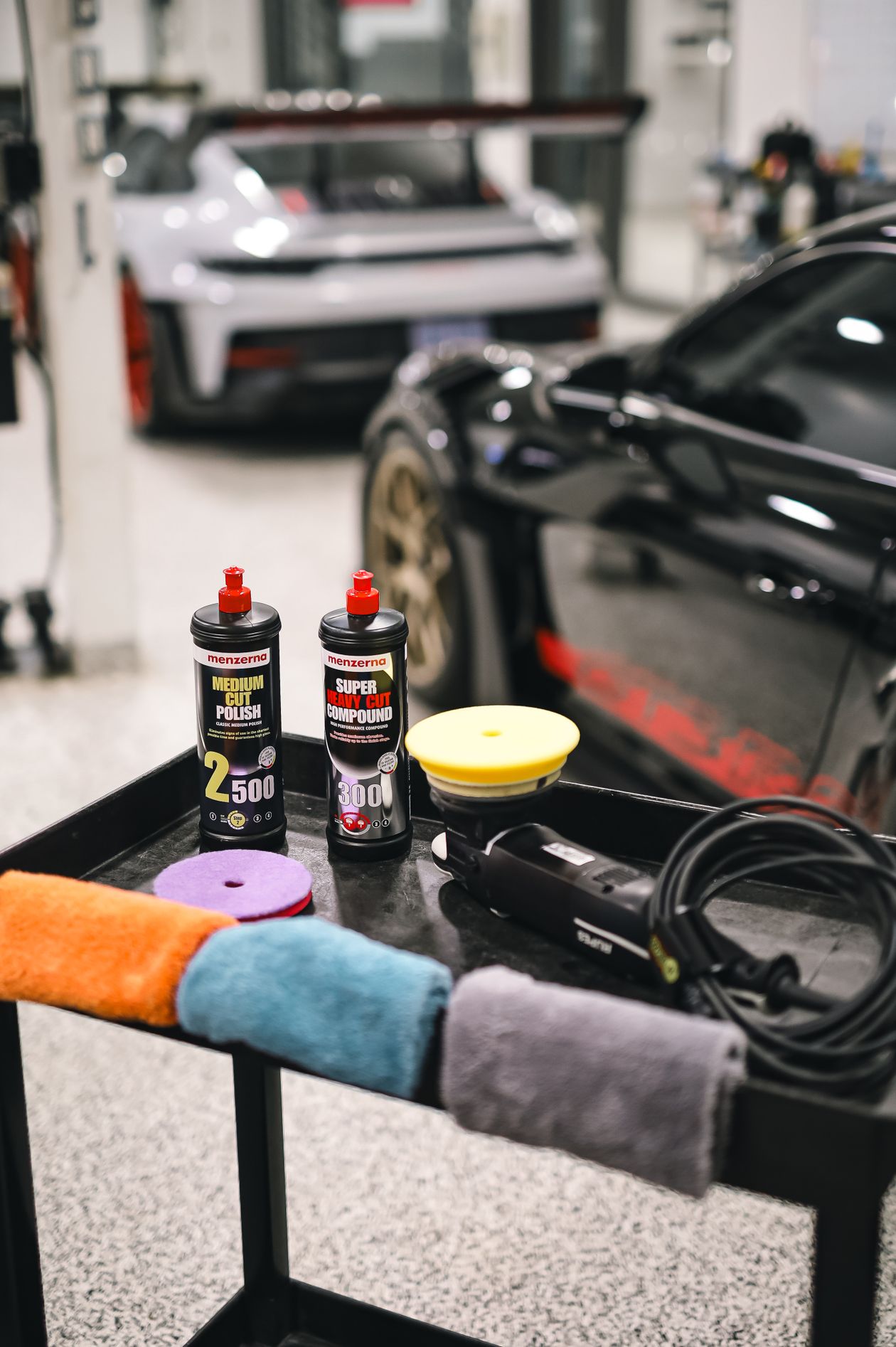
Left in place and baked by heat, mineral deposits and acidic rain do something worse: they eat microscopically into the clear coat, leaving a crater shaped exactly like the droplet. Now washing changes nothing, because there is nothing on the surface to remove. The outline you see is a tiny depression in the paint itself. This is etching, and the only fix is the same one used for swirl marks: machine polishing that levels the surrounding clear coat down past the damage.
| Clue | Surface deposit | Etched damage |
|---|---|---|
| Feel | Slightly rough or gritty under a fingertip | Smooth, but the outline is visible |
| After washing | Gone or much fainter | Unchanged |
| Shape | Round spots with raised, crusty edges | Crater-like rings or water-shaped ghosts |
| Fix | Mineral remover or clay treatment | Machine polishing to level the clear coat |
Prevention is mostly parking and timing
You cannot control Matthews water or Piedmont thunderstorms, but you control exposure. Avoid lawn sprinkler overspray, which is the single most concentrated source of hard water most cars meet. Dry the car after a wash or a storm rather than letting droplets bake in the sun, because heat is the accelerant that turns deposits into etching. A waxed, sealed, or coated surface buys you time: deposits sit on the protection layer and remove more easily before they reach the paint.
If your car already shows rings that survive washing, do not attack them with a scouring pad or a kitchen cleaner. Have the paint inspected. Surface deposits are a quick, inexpensive fix. Etching is a polishing job. Guessing wrong in either direction costs more than the inspection.
Sprinklers, wells, and the Matthews water problem
Around Matthews and the wider Charlotte suburbs, the most aggressive hard water most cars meet does not fall from the sky. It comes sideways, from lawn irrigation. Subdivision sprinkler systems, many of them on well or municipal water with real mineral content, overspray onto driveways and street parked cars night after night through the summer. A car can take a mineral bath three times a week while its owner sleeps, and the spots build in layers that a monthly wash never quite resets. If your spots keep returning in the same pattern on the same side of the car, look at where the car sleeps before you blame the rain.
The fixes are humble: adjust or flag the sprinkler head that is painting the driveway, park a few feet further from the arc, and rinse the affected panels in the morning during the heaviest watering weeks rather than letting each night's deposit bake through the day. Combined with a decent coat of protection, that routine turns a chronic problem into an occasional one, which is the realistic goal with water in this part of North Carolina.
Glass tells the same story and is worth a look while you are diagnosing. Windshields and side glass collect mineral spotting in the wiper arc's untouched corners, and the same two stage logic applies: deposits clean off, etching, rarer on glass, does not. Detailers treat glass with dedicated polishes and sealants for the same reason they treat paint in stages. If your windshield sparkles with tiny rings in low sun, the car has been drinking hard water for a while, and the paint has a matching record written on it.
Common questions
Why do water spots stay after I wash the car?
If they are etched, they are tiny craters in the clear coat rather than dirt on it. Washing cannot remove damage that is below the surface. Polishing can.
What causes hard water spots?
Dissolved minerals, mainly calcium and magnesium, left behind when water dries. Sprinkler overspray and sun-dried rain are the usual sources.
Can I remove spots myself?
Fresh surface deposits often respond to a proper mineral remover. Etched spots need machine polishing, and scrubbing them by hand usually adds scratches instead.
Photos in this guide are representative stock images.
← All guides from Doctor Detail of Matthews← Back to Doctor Detail of Matthews