Cloudy headlights are so common in North Carolina that drivers stop seeing them, right up until a rainy night drive on Independence Boulevard when the road markings seem to have been dimmed. Modern headlight lenses are polycarbonate plastic with a UV protective coating from the factory. Piedmont sun degrades that coating over years, and the exposed plastic oxidizes into the familiar yellow haze. The good news is that most cases are fixable without buying new housings. The trick is knowing which cases are not.
What restoration actually does
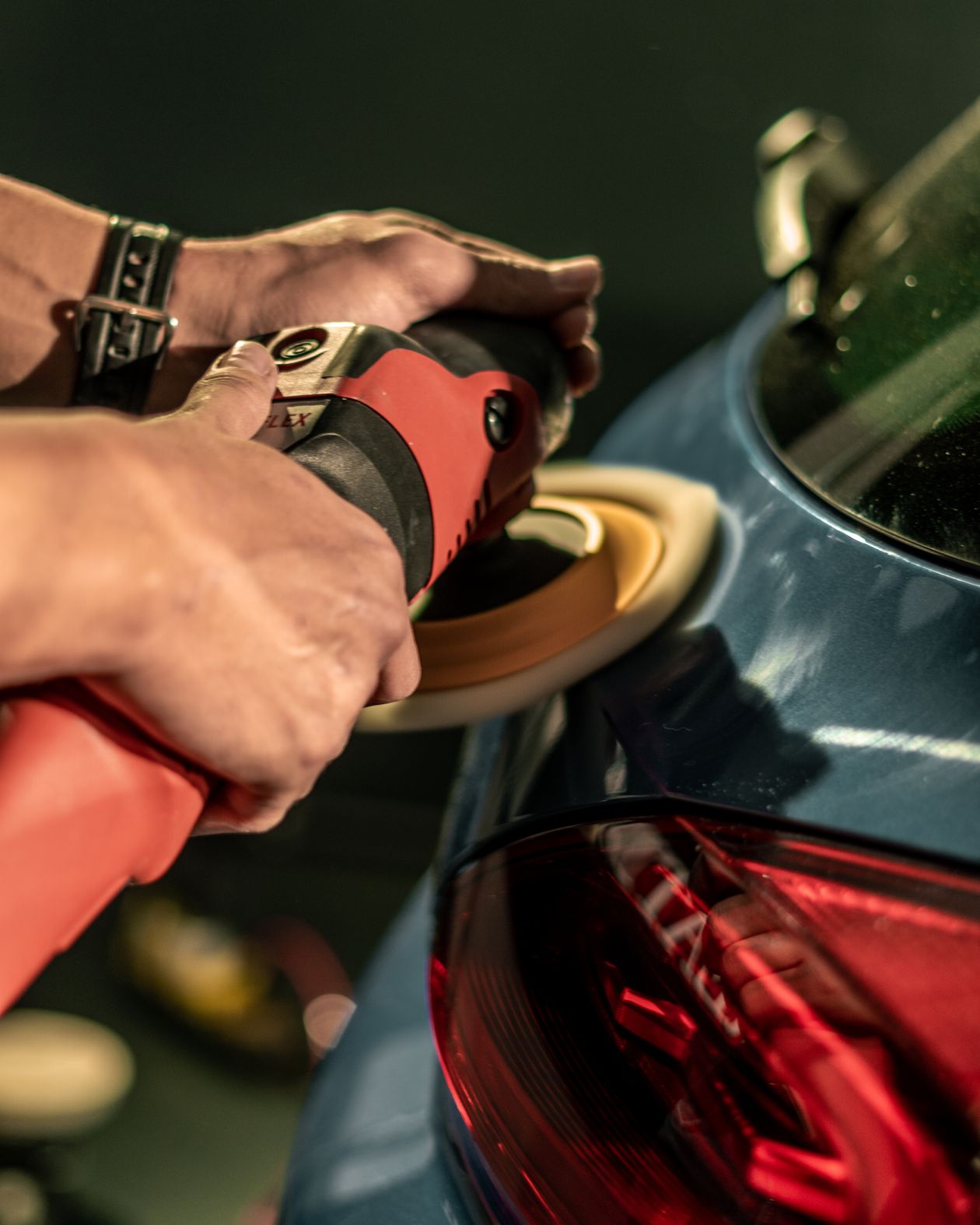
Restoration removes the oxidized outer layer of the lens by wet sanding through progressively finer grits, then machine polishing the plastic back to clarity, the same leveling logic as paint correction, applied to plastic. The essential final step is a new UV protective coating or sealant. Skip it, and bare polished plastic, now with no protection at all, clouds again faster than it did the first time. A restoration quote that does not mention UV protection is a quote for a temporary result.
| Situation | Restore | Replace |
|---|---|---|
| Surface is cloudy, yellowed, or hazy, lens solid | Yes | Not needed |
| Lens is cracked or has deep crazing | Will not fix cracks | Yes |
| Moisture or fog inside the housing | No, problem is the seal | Yes, or reseal if possible |
| Cloudiness returns within months | Only with proper UV sealant | Consider it if coating has failed fully |
The inspection question everyone asks
North Carolina's annual safety inspection includes lighting: headlights must work and project properly, and inspectors can fail a vehicle whose lenses are so degraded that light output is seriously reduced. In practice, mildly hazy lenses pass and severely clouded ones are at risk, and the bigger issue is not the inspection sticker but night visibility. A restored lens commonly recovers most of the light output the oxidation was stealing, which you notice the first time you drive in rain after dark.
Do it yourself kits exist and can improve a mildly clouded lens for a season. Their limits are the abrasives, which stop early, and the sealant, which is usually the weakest part. For a car you plan to keep, professional restoration with a proper UV cure is the version of the job that only gets done once.
Why one headlight is always worse
Owners often notice that one lens has clouded much faster than the other, and there is usually a parking explanation. The side of the car that faces the afternoon sun at home or at work takes years of extra UV exposure, and lenses age at the speed of their sunlight, not the car's mileage. A Matthews commuter who parks nose out in an unshaded lot on Independence Boulevard can age the driver's side lens years ahead of the passenger side. Restoration can be done as a pair for even appearance, and often should be, since the clearer lens is usually on the same path, just behind.
While the lenses are being judged, look at the whole front of the car with the same eyes. Cloudy lenses travel with faded trim, oxidized hood paint, and water spotted glass, because all of it has been sitting in the same sun. Owners frequently bundle the lens work with a wash, a polish of the worst panels, and fresh protection, since the car is already in the shop and the inspection is already done. It is the efficient version of the job: one visit that resets the entire sun facing side of the car.
Cost, discussed the honest way, favors restoration in most cases. A professional restoration is a labor service priced like one, while replacement housings for modern vehicles, especially the sealed LED units on newer models, can cost several times more before installation. The exception is the failed housing: cracked, moisture filled, or with reflectors degraded inside. No surface work fixes the inside of a lamp. That is why the inspection matters more than the quote: twenty minutes of diagnosis tells you which of two very different bills your car actually needs, and any shop that quotes blind, without seeing the lenses, is guessing with your money.
Common questions
Why do headlights turn yellow and cloudy?
The factory UV coating on polycarbonate lenses degrades in sunlight, and the exposed plastic oxidizes. Sun heavy climates like the Piedmont speed the process up.
Will restored headlights stay clear?
Only if a new UV protective coating is applied after polishing. Without it, the unprotected plastic clouds again quickly, sometimes within months.
Can cloudy headlights fail a North Carolina inspection?
Severely degraded lenses can, since lighting is part of the safety inspection. The more important reason to fix them is night and rain visibility.
Photos in this guide are representative stock images.
← All guides from Doctor Detail of Matthews← Back to Doctor Detail of Matthews